
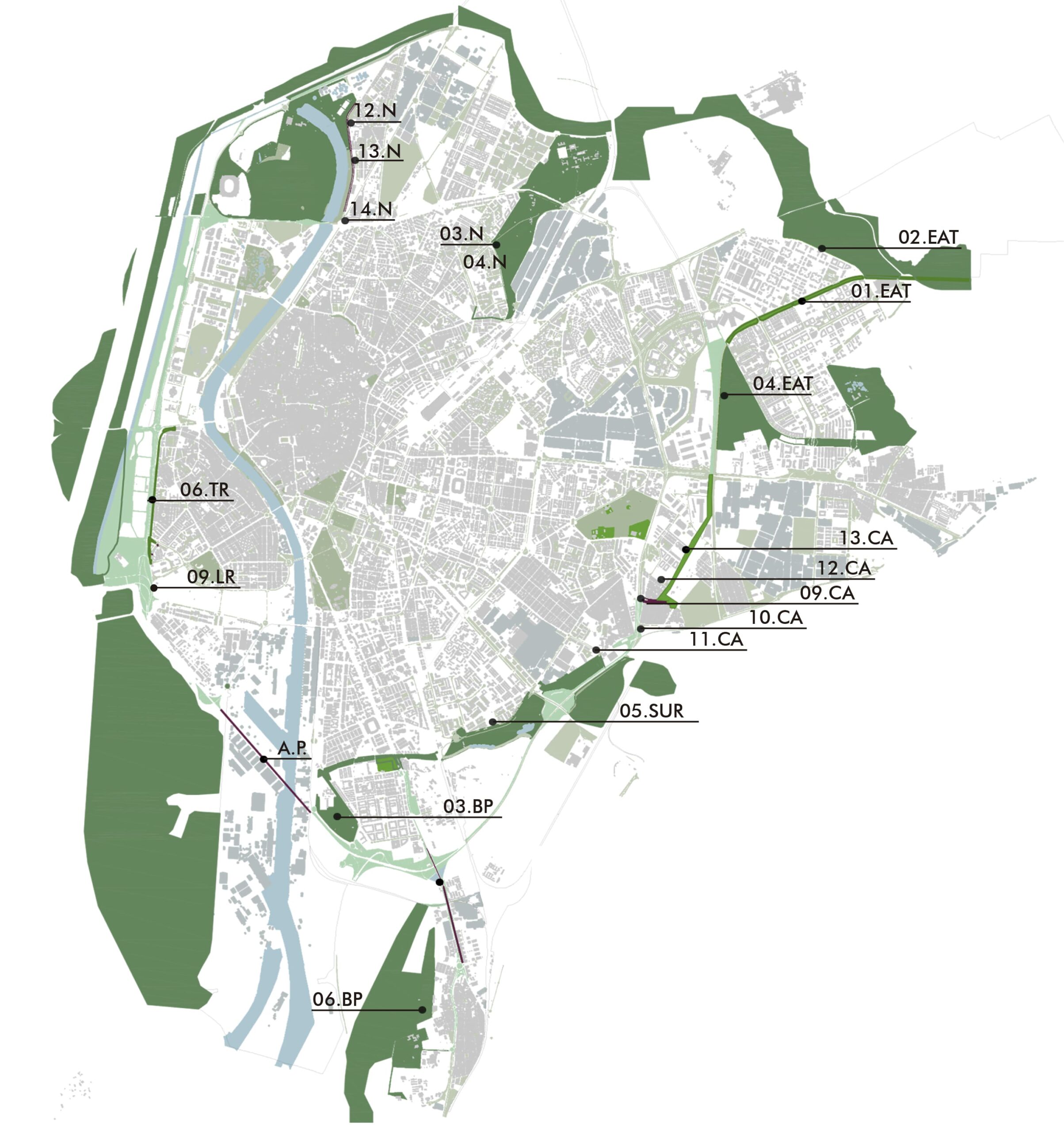
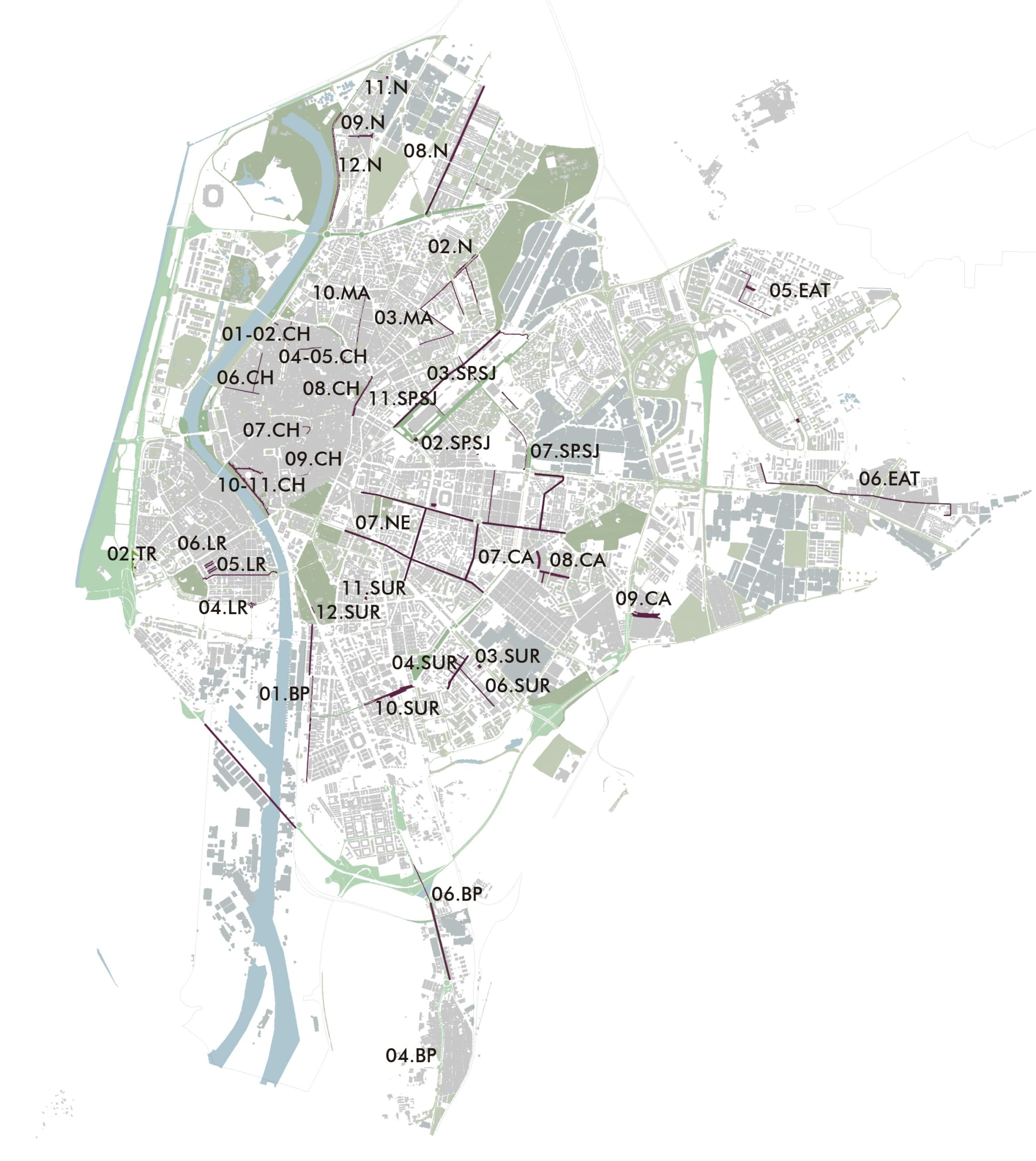
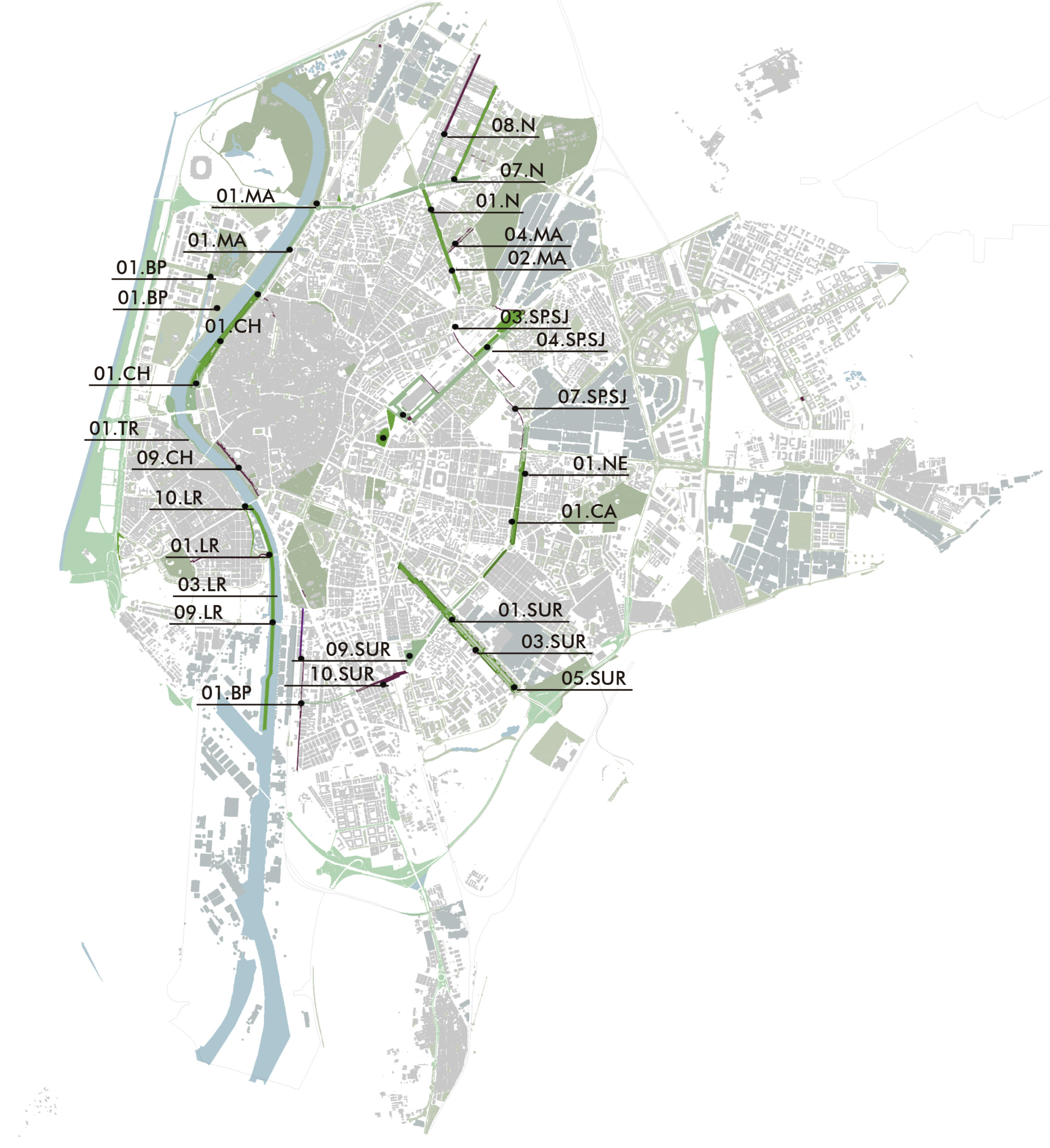
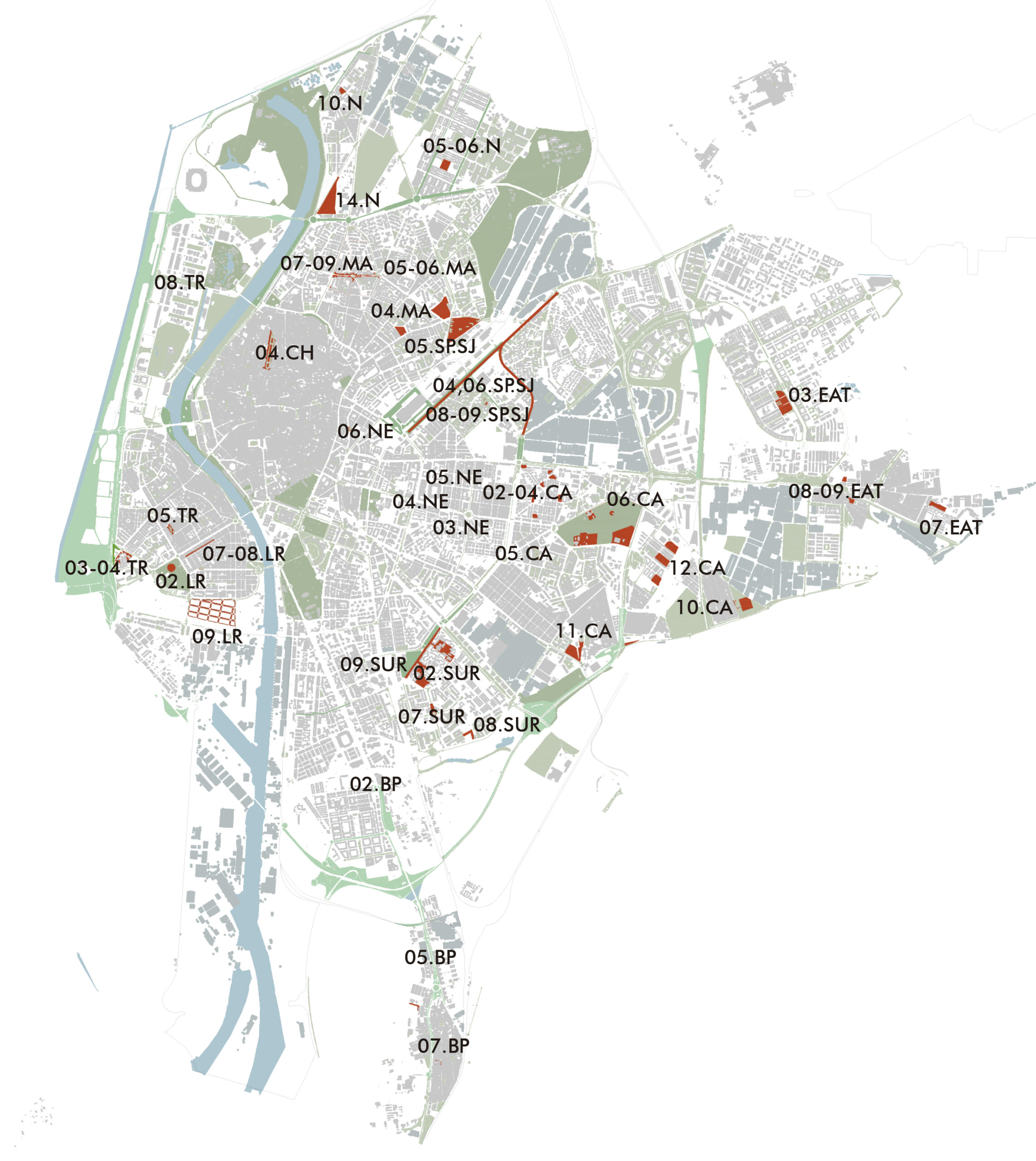
The Urban Improvement Micro-Interventions Plan for Seville: REAVIVA is developed with the purpose of creating a management tool for public spaces that facilitates the work of municipal public entities. A guide that promotes the restoration of traditionally enjoyed proximity spaces to the current city. It is therefore a matter of prioritizing, among other things, pedestrian and bicycle mobility, as well as universal accessibility. Under the premise of urbanism directed toward people, the needs identified through extensive fieldwork are collected and organized, in addition to the priority issues indicated by various neighborhood associations.
As a result of this analysis, a plan is developed: a catalog of more than one hundred small-scale, low-cost, high social impact interventions distributed throughout the city of Seville, with special attention to the urban periphery. The proposed solutions are presented according to four general strategies: green and productive spaces, mobility and accessibility, neighborhood regeneration, and reuse of disused heritage.
This Micro-Interventions Plan seeks to function as a map or roadmap for subsequent public urban rehabilitations in the city of Seville. Proposals of both material and immaterial nature; understanding the latter as logics of labor reactivation, program reactivation, bringing together involved urban agents, reappropriation, pedagogy, etc. This map of interventions, consistent with the scale, is developed at a conceptual level, with each one requiring detailed study guided by a citizen participation process, a key axis around which this document revolves.
In summary, the Urban Micro-Interventions Plan for Seville aims to promote a change in the way the city is managed, where the starting point is direct contact with citizens and the reality in which we live.